Esprit d’escalier is a French expression for thinking of the perfect comeback too late, as you’re leaving or walking down the stairs after a conversation ends. Oscar, the founder of Esprit D’escalier, turned this idea into something wearable.
Esprit D’escalier is a young independent label that revolves around the mind of Oscar who designs, styles, models, and photographs the pieces all by himself.
Oscar’s background as a stylist, including his work on A$AP Rocky’s AWGE SS25 show and careful eye for curation, shapes everything the brand stands for and wants to construct.
Today, his work is hard to ignore. His pieces complete a look, his materials are raw and heavy, and the brand is preparing its next chapter. We spoke with him about the brand, his inspirations, and what comes next.
“My work becomes personal when I interrogate the reference. Questioning the past and seeing how it’s still present today is immediately personal”
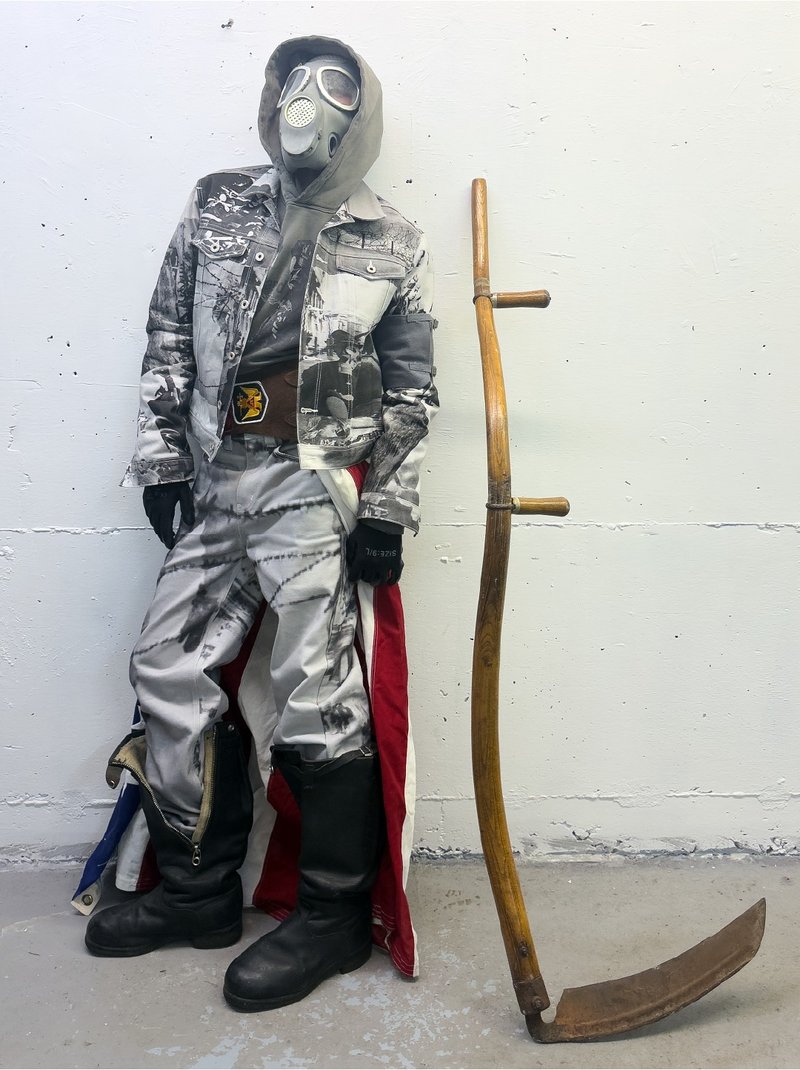
1. What usually sparks the beginning of a collection for you: a historical reference, an image, a cultural moment, or a specific garment?
Usually a specific garment, but sometimes none of those. Most often it’s a feeling. I expand on it, write as much as I can about it, and eventually tie everything together with physical references.
2. Which eras or designers have had the biggest influence on your approach to fashion, and how has that influence evolved over time?
’90s Margiela and 2000s Raf Simons. I’ve started a lot of pieces by upcycling, so early Margiela is an obvious connection. With Raf, I’ve always connected to the heavy layering and storytelling of his runways. His shows reflected his emotions, there was always so much to interpret in his graphics, and his silhouettes were perfect.
3. Your work often draws connections between clothing and history. How do you translate research into something personal rather than simply reproducing a reference?
My work becomes personal when I interrogate the reference. Questioning the past and seeing how it’s still present today is immediately personal. I take garments from previous collections or new designs and weave the graphics or references through everything, and that process is personal by nature.
4. What was it like working with A$AP Rocky, and what’s one thing that stuck with you?
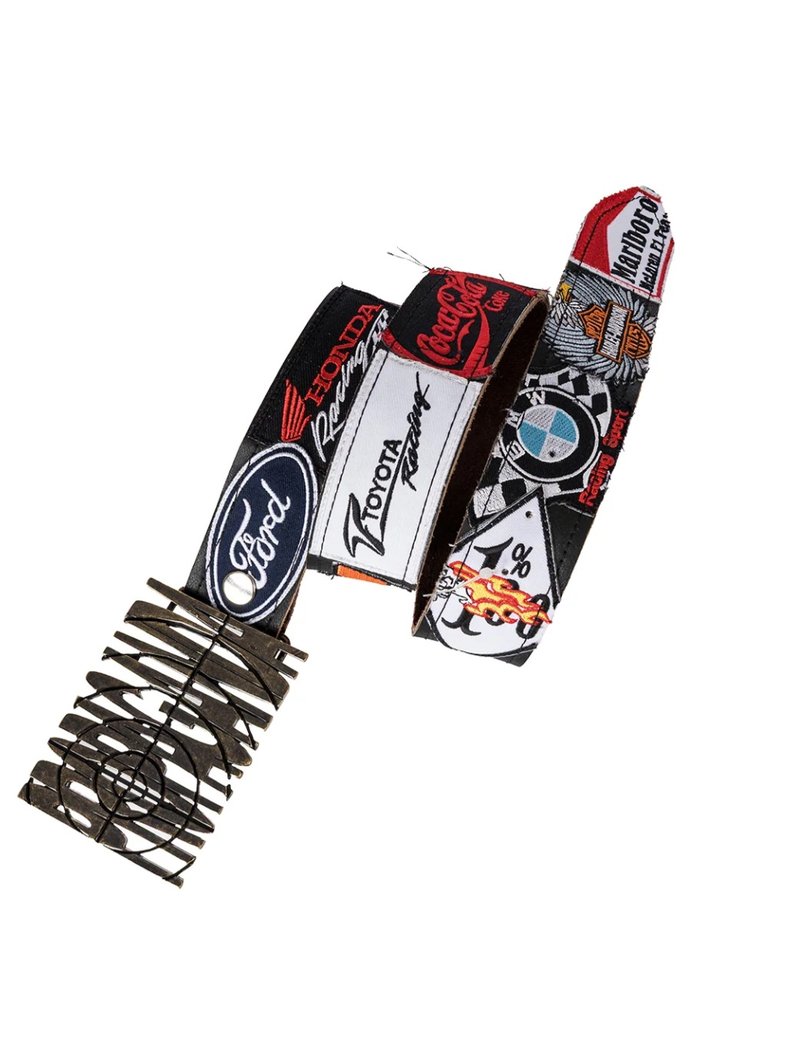
The first thing he did when we met was point at the Trinity belt sample I was wearing and say he wanted one. That definitely gave me an ego boost, haha. But it was also a reminder that everyone is human. People put artists on a pedestal that feels unreachable, and that moment showed me anything is possible. You just have to keep putting yourself in positions that can bring you there.
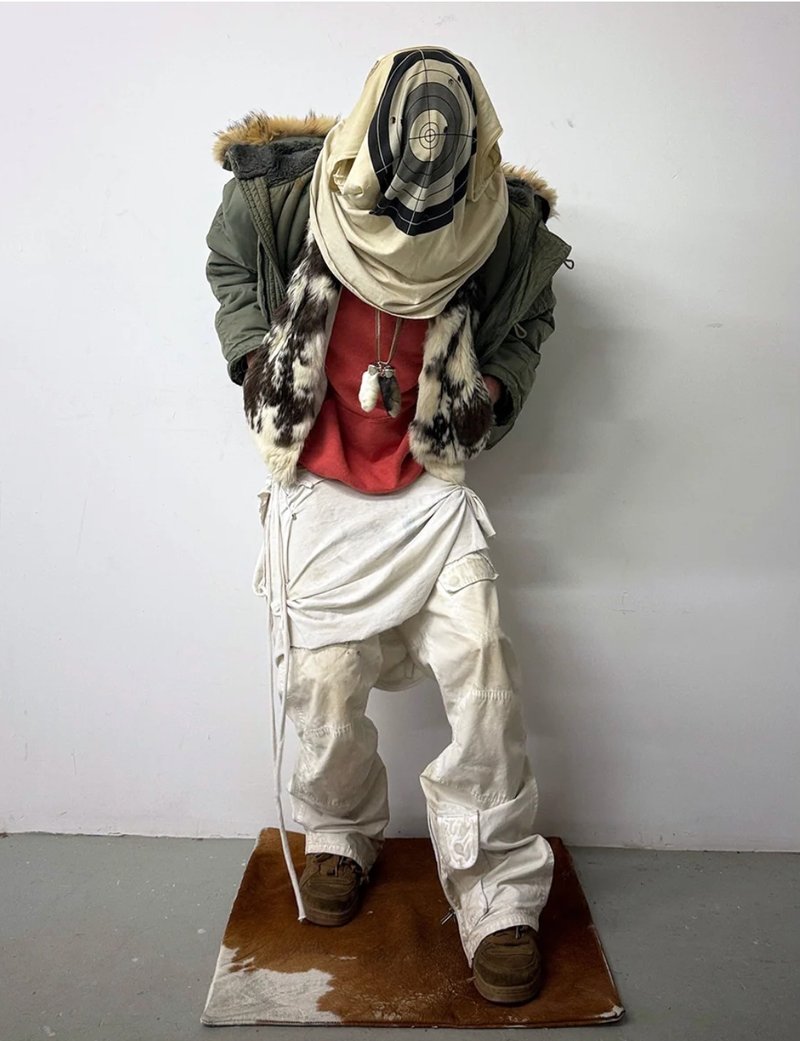
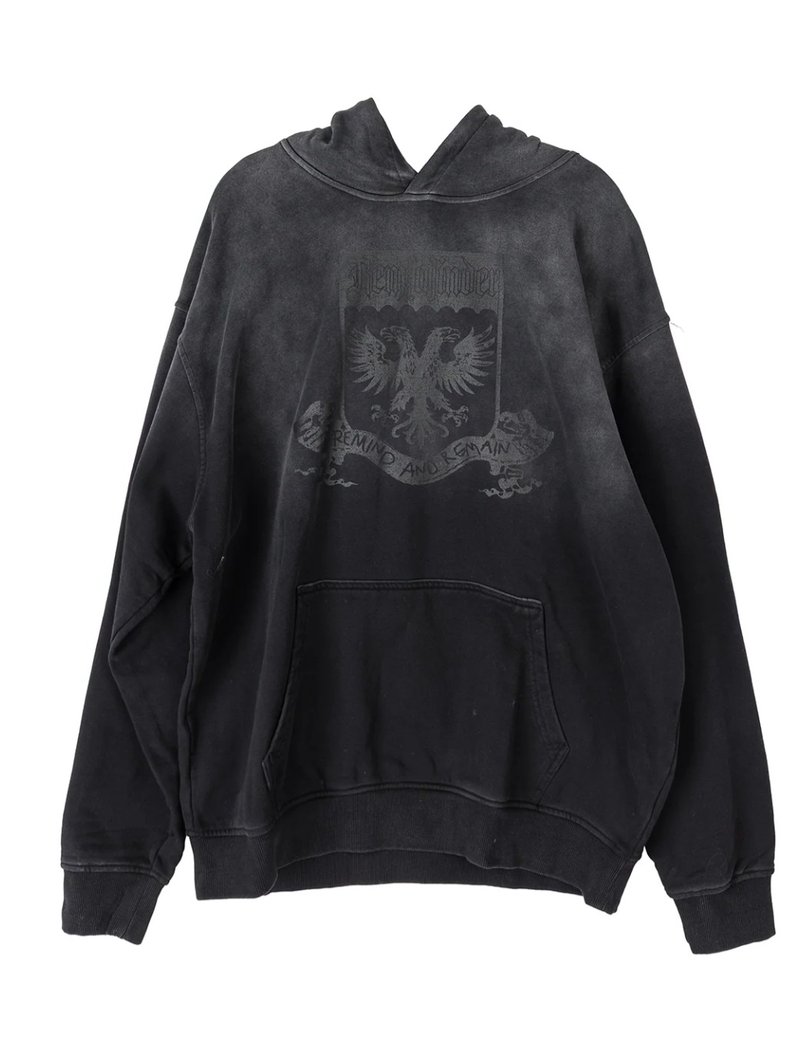
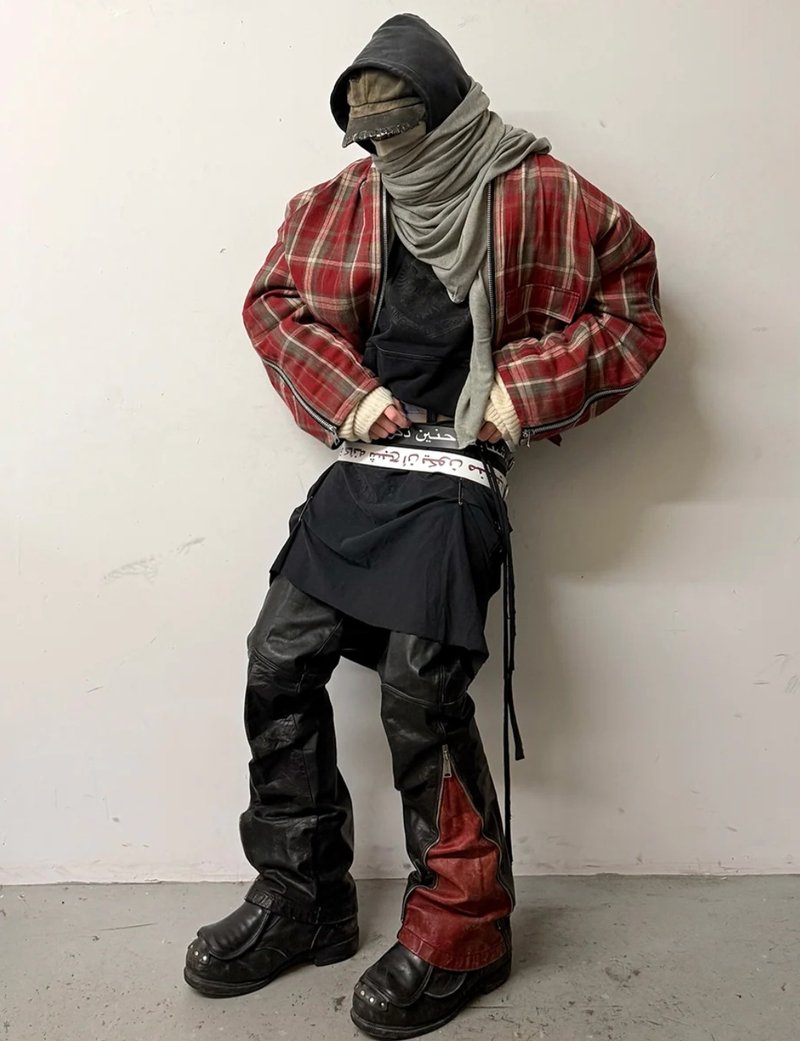
5. If your clothes lived in a certain time period, when would it be?
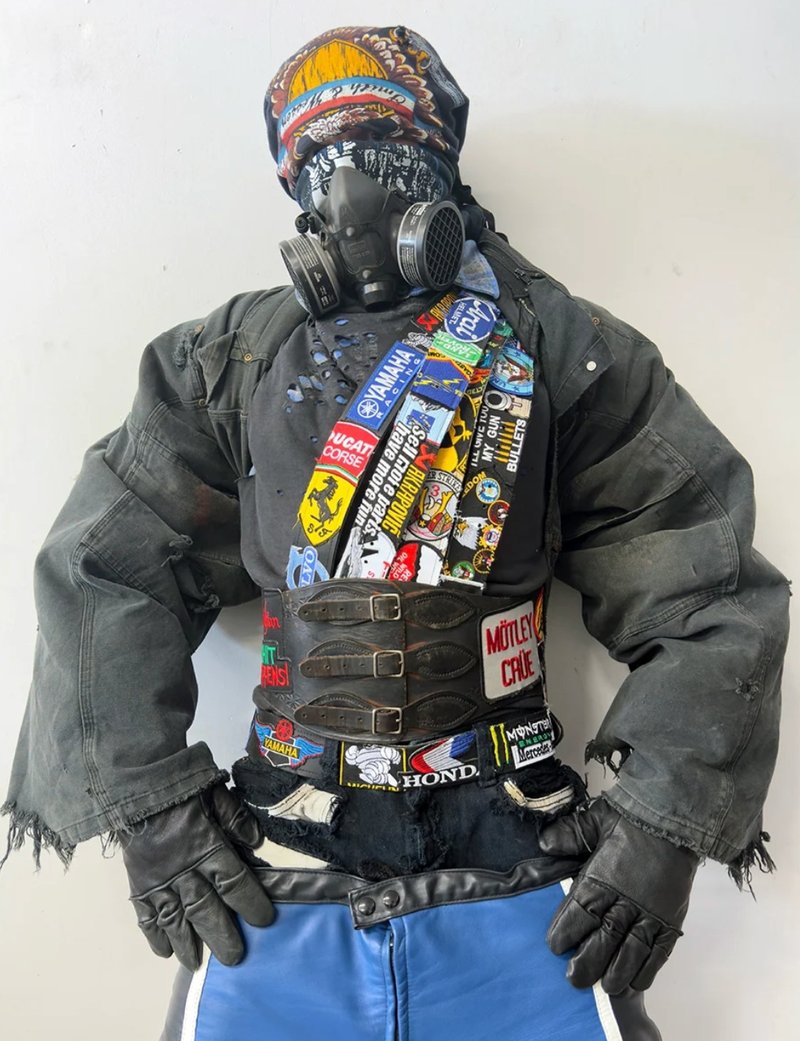
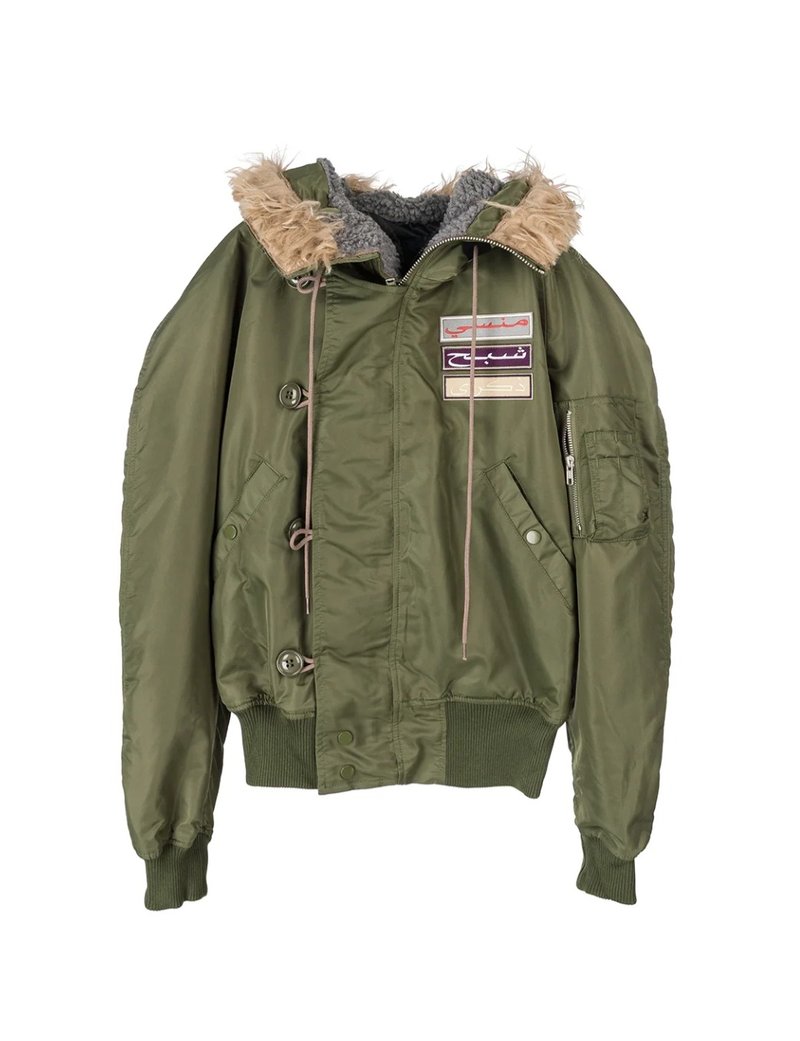
The future. I’ve always imagined my looks in an anarchist environment, where covering your face is how you stay safe. The discoloration and distressing in my pieces have always added to that feeling.
6. You design, shoot, and style your own work. How do you handle it, and what’s the hardest part?
Juggling everything is the hardest part, especially sampling and shooting. Styling is what I love most. But when you have a specific pose in mind, it’s hard to pull it off with just yourself and a self-timer.
7. If you could work with any brand, which would it be and why?
Peak ’90s Martin Margiela. I’ve owned a lot of Margiela pieces, and the way they’ve held up over time, both physically and in relevance, is exactly what I want for my own clothes. The innovation back then was unmatched, and I would have loved to build something alongside him.
8. What is this collection about, and what do you want people to take from it?
Pattern Recognition is about making the mechanics of fear visible. The state of the world over the past few years left me in disbelief, until I started recognizing the pattern so many countries have followed. I used constructivist and agitprop visual language, the same tools propaganda used to manufacture fear, and turned them against it. I want to drag those patterns into the light and challenge them, because I don’t think many people realize how cruel those in power can be toward society.
9. Why fashion?
I’ve always loved clothes, but Raf Simons’ Virginia Creeper collection is what really hooked me: the maximalist layering, the messaging, the graphics. It was the first time I saw clothing say exactly what someone felt. From that point, I fell down the rabbit hole of Helmut Lang, Margiela, and the list goes on.
