
Kai Ghattaura (23) is a British-Indian designer and recent graduate of the MA Fashion program at Central Saint Martins (CSM). His world is a mix of medieval fantasy with internet culture, from scythes and muddy armour to emojis and brainrot references. Kai challenges the serious—and often mundane—fashion environment, with humor, a rave runway show, and his ability to achieve all of this using recycled materials. He’s designed for EsDeeKid, collaborated with Fornite, and recently presented his senior collection, Seminomatic, at London Fashion Week. Since November, I’ve had the chance to get to know Kai, assist with his work, and witness his creative process behind the scenes.
The Story Behind Kai Ghattaura
Kai grew up in Telford, England, spending most of his free time on a computer. In the evenings, his mum would read him fairytale stories before bed. Those two experiences would later influence his perspective on fashion. At the age of 18, he moved to London to pursue a BA in Fashion at CSM. The city’s party scene made Kai realize what was most important to him: what he wears.
“Beauty in clothing comes from wear and tear, I want to make clothes that emphasize that. There’s no joy in keeping something on ice in your wardrobe to goon at.” - Kai Ghattaura
Kai’s BA collection, “HonourBound,” was inspired by folk stories from “Grimms Fairy Tales” combined with references to 4chan, reddit, and other websites he grew up on. Each look felt like it teleported to CSM from a fantasy world. The castle boots, giant swords and scythes, metal armor, emojis, pagan-pods (headphones) were a fusion of medieval aesthetics with internet culture. It went viral, proving to Kai that there was a customer out there interested in his clothing. He then went on to apply to the MA Fashion course to further develop his brand.
A Scattered Dream
That summer, Kai developed a new collection titled A Scattered Dream. It aimed to showcase what was possible to achieve with a small team having fun with almost no budget. Rather than sourcing new fabrics, the designers transformed discarded garments and donated curtains, all acquired for free.
“We were literally picking up trash from the streets to turn into garments and accessories. There was no hierarchy, no boring jobs, just pure raw creation which would be presented in a runway show 3 months later.” - Kai Ghattaura
The collection was presented as a hybrid runway-rave in partnership with Genesys. Everyone who Kai met over the years from partying in London attended. The unusual setting paid homage to what made Kai realize his interest in clothes, while subverting traditional shows by making the audience involved, rather than just spectators.
The Making of Seminomatic
As a first-year MA Fashion student at CSM,I was expected to assist a second-year student in developing their collection. It was my first day of class and a gold emoji belt hanging in the studio seemed familiar. That evening, I discovered that it was Kai’s desk, and remembered seeing his BA collection online. Once we met, we bonded over London’s underground rave scene. That connection carried through the months that followed, as I experienced the experimentation, evolution, and final production of Kai Ghattaura‘s MA graduate collection.
He only spent a few hours on research, preferring to dedicated the majority of time to developing ideas that arose from that initial session. Kai came to studio to experiment rather than extensively planning out the details beforehand. Without overthinking, he often created something incredible on his first attempt. Some of my favourite examples include his use of beads, draped trousers, and fabric wrapped into headpieces.
“The aim is that every season is vastly different from previous ones, so that there’s always something new and exciting within the making process that we aren’t expecting. I never want to drag out the same formula to create a collection.” - Kai Ghattaura




Threads of Heritage
Initially, Kai was motivated to learn more about his Indian heritage, which he always felt disconnected from. This research led him to explore more ways of incorporating his background, in a way that was digestible to a western audience. Kai’s collection, Seminomatic, explores how clothing changes when it is removed from its original cultural and material context.
“South Asian designers are often put into a box - silk, bright colours, embroidery and drapes. I wanted to present a collection that anyone could wear and not feel intimidated by.” - Kai Ghattaura
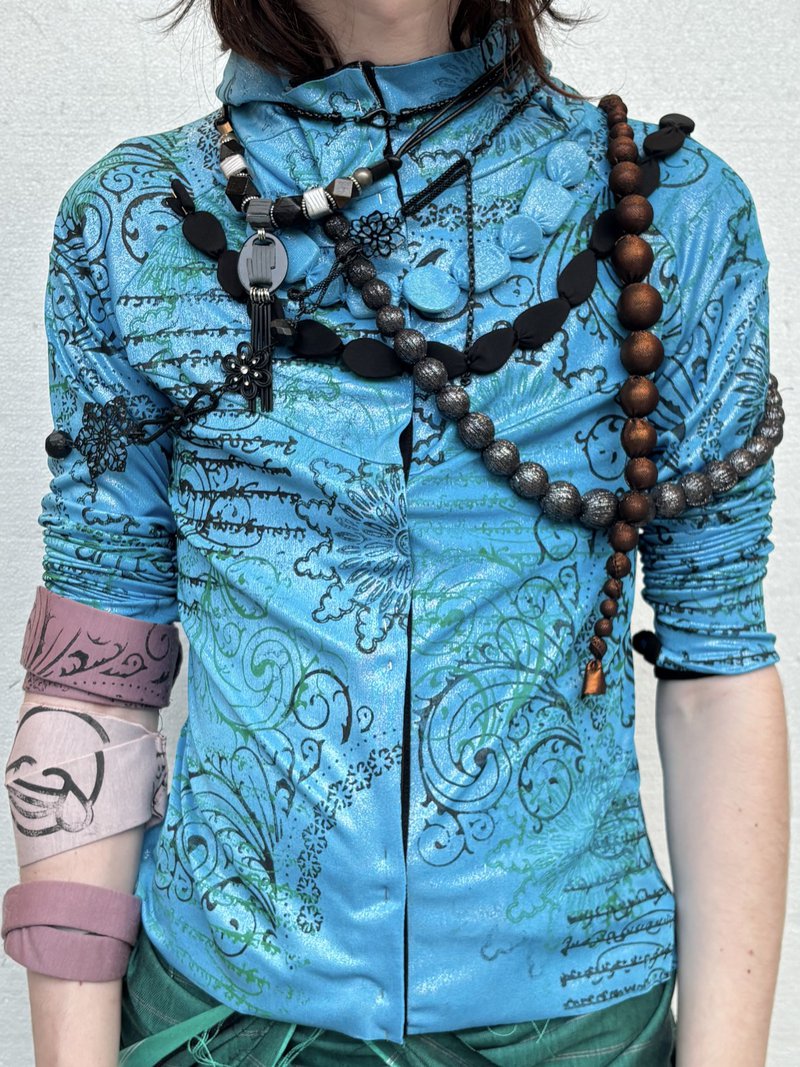
In particular, Kai reflected on post-colonial India, imagining nomad communities reclaiming discarded British clothing, such as the Nike Tech Fleece, and merging it with traditional adornment. I developed woodblock prints that highlighted details from markets and temples in Punjab, as well as the iconic “face with tears of joy” emoji.
Soon after the woodblocks were made, I walked in on the madness in the classroom next door; Kai covering the fabric pieces with the prints, elaborately placing and merging them together. The Nike Tech Fleece —a staple British garment— was recreated with Indian iconography and internet culture.


New Interpretations
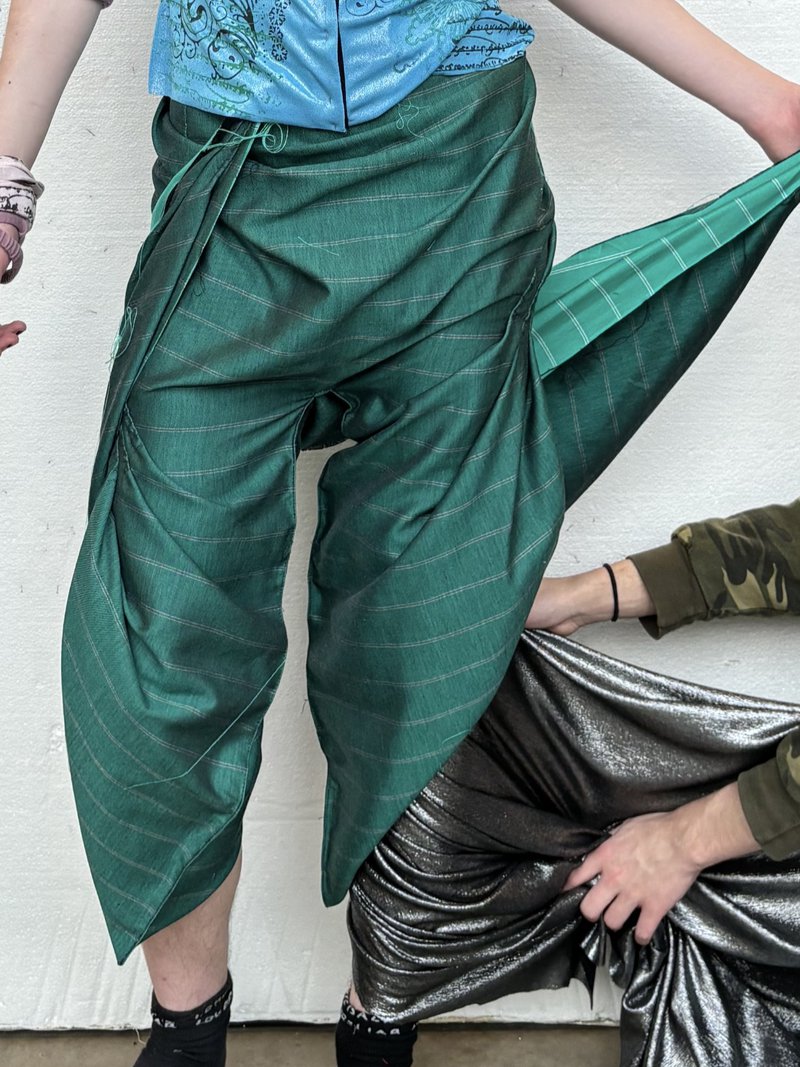
Kai Ghattaura also reinterpreted the dhoti, a traditional Indian garment formed by wrapping cloth around the body, through engineered rectangular trouser construction. Zips, flies, and belt loops were removed for the entire collection in favour of adjustable tying systems and antique buttons. Kai experimented with different ways to tie the dhoti around himself, and then engineered them into trousers which simplify the tying process for the customer. A lot of the patterns started as simple rectangles, manipulated through slashing, pulling, and pleating in specific areas to fit the body.

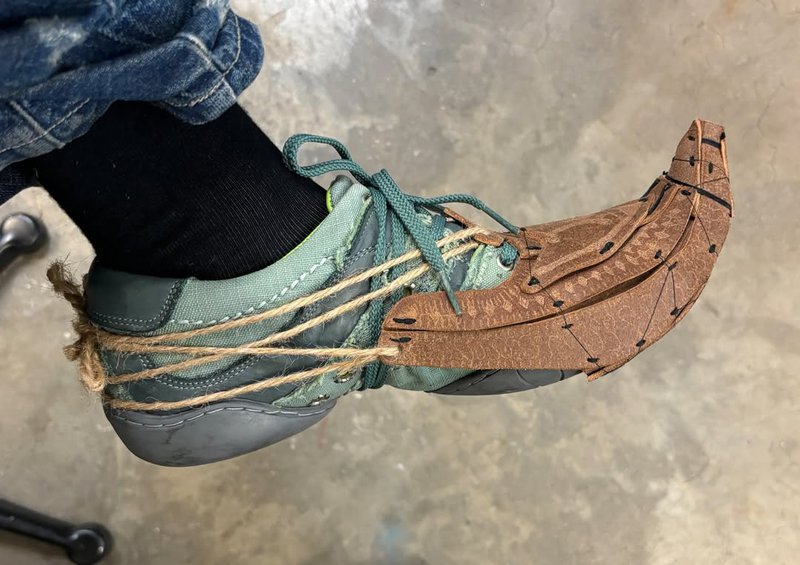
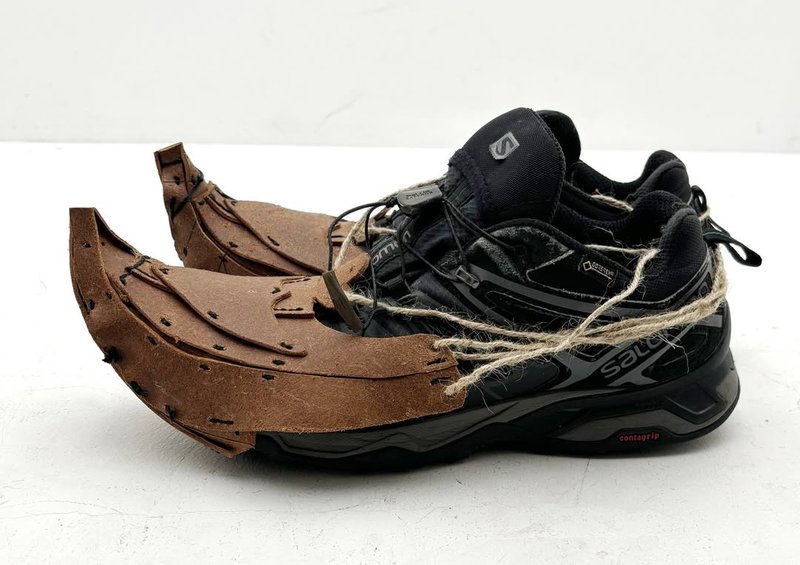
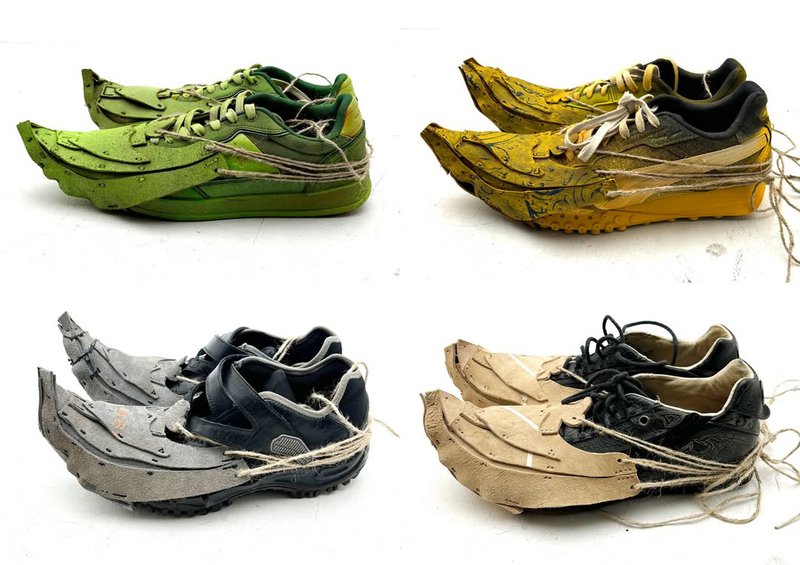
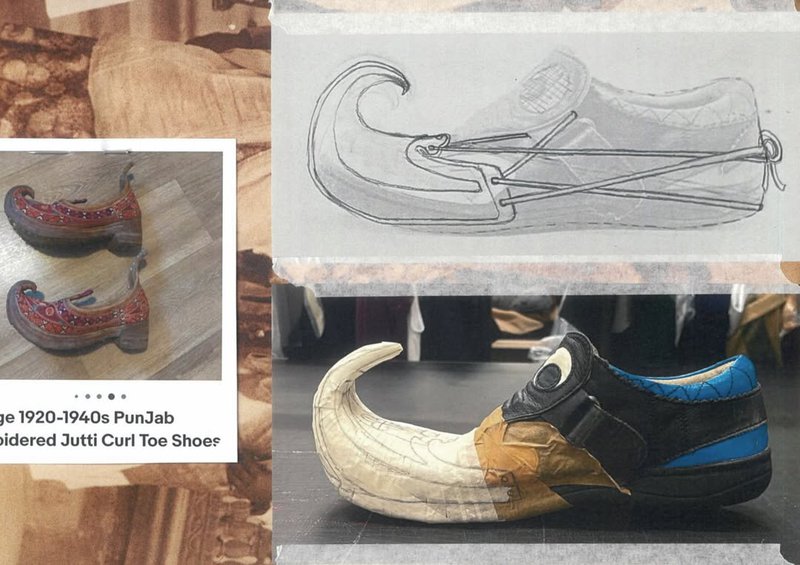
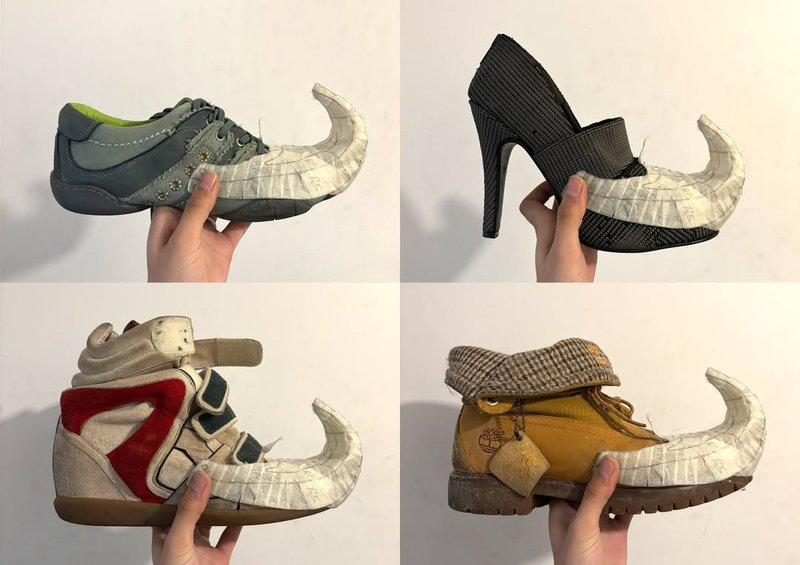
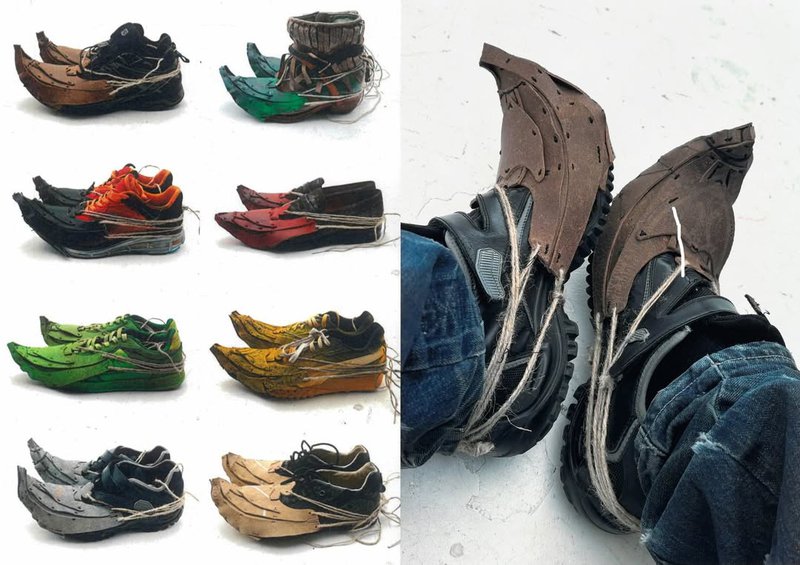
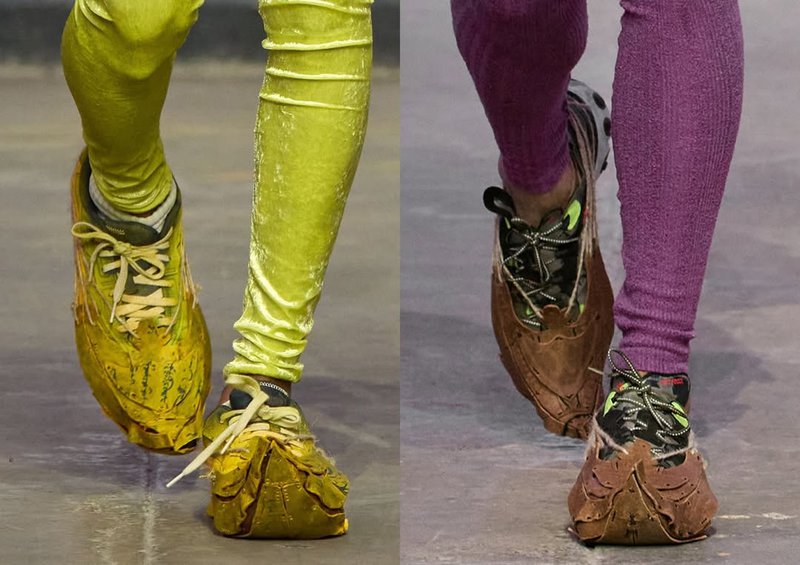
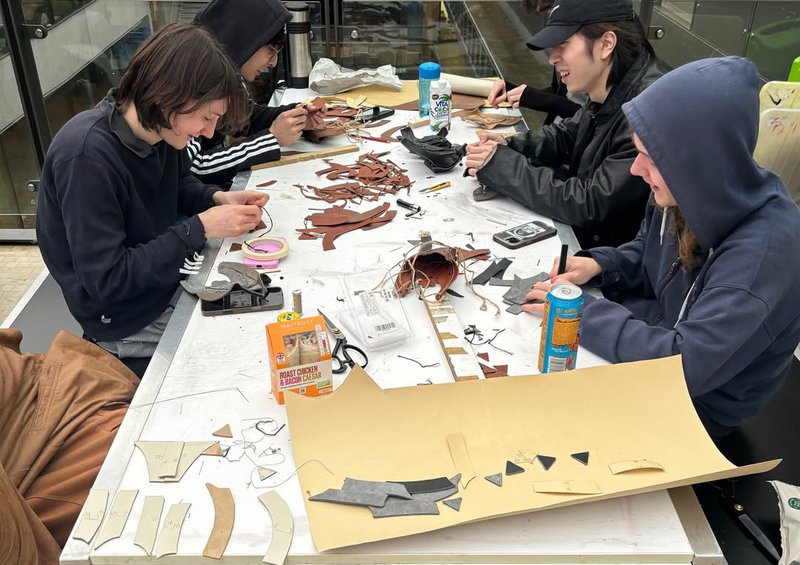
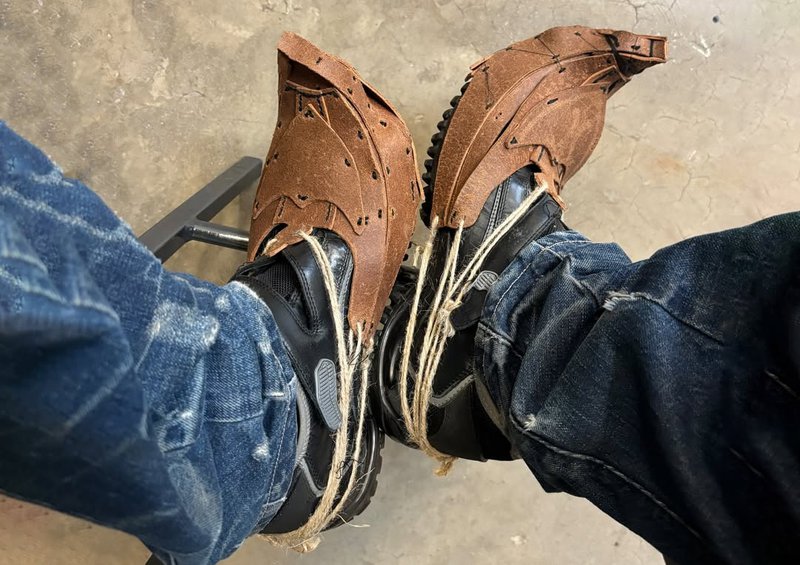
Finally, Kai, a team of helpers, and I constructed seven pairs of jutti curl-toe extensions—detachable curled toe pieces inspired by the traditional Punjabi jutti, a handcrafted leather shoe from North India. We cut leather pieces, punctured holes in them, and hand stitched them together day and night. The design, developed by @moorhousehenry, reinterprets the traditional Punjabi jutti into a more adaptable form, with the curled toe attaching to the shoe via ties around the heel.
A Different Kind of Luxury
Throughout the creation of Kai’s collection, I rarely ever saw him use new materials. Instead, he transformed unsellable reject garments sourced through the charity organization TRAID. The pieces were deconstructed and re-stitched into a flat fabric, which where then used to create the garments. Ultimately, he proved that creating an incredible collection doesn’t require much consumption.
“Fashion is inherently such a selfish thing to pursue, it’s hard to justify creating a brand in this day without good reason. I don’t believe luxury comes from the use of expensive raw material, but from how much care you have put into the process of developing the raw material to create something which will last.” - Kai Ghattaura
Furthermore, Kai aims to make fashion—which lately feels monotonous and devoid of soul—meaningful again by having fun, rejecting material expectations, and conceiving engaging experiences for fashion shows.

For his next chapter, he plans to continue developing his brand, which is set to enter production soon. The young designer is already working on projects with Vice, Kingpins Denim, and Thrilliam Angels. He is also planning another show for September, which will be unlike anything we’ve seen before.
