
How a place becomes an idea that travels

Every culture that has shaped the world has done so in the same way. Its identity learned how to travel.
Ideas do not cross oceans on their own. They move by design, through garments, sounds, spaces, and stories made with enough depth that the identity survives the journey. When a culture masters that, its influence compounds across generations and geographies. When it does not, its best work still escapes into the world, but the name detaches somewhere in transit, and someone else collects the credit.
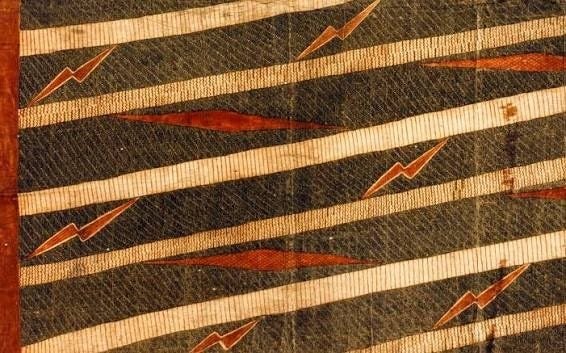
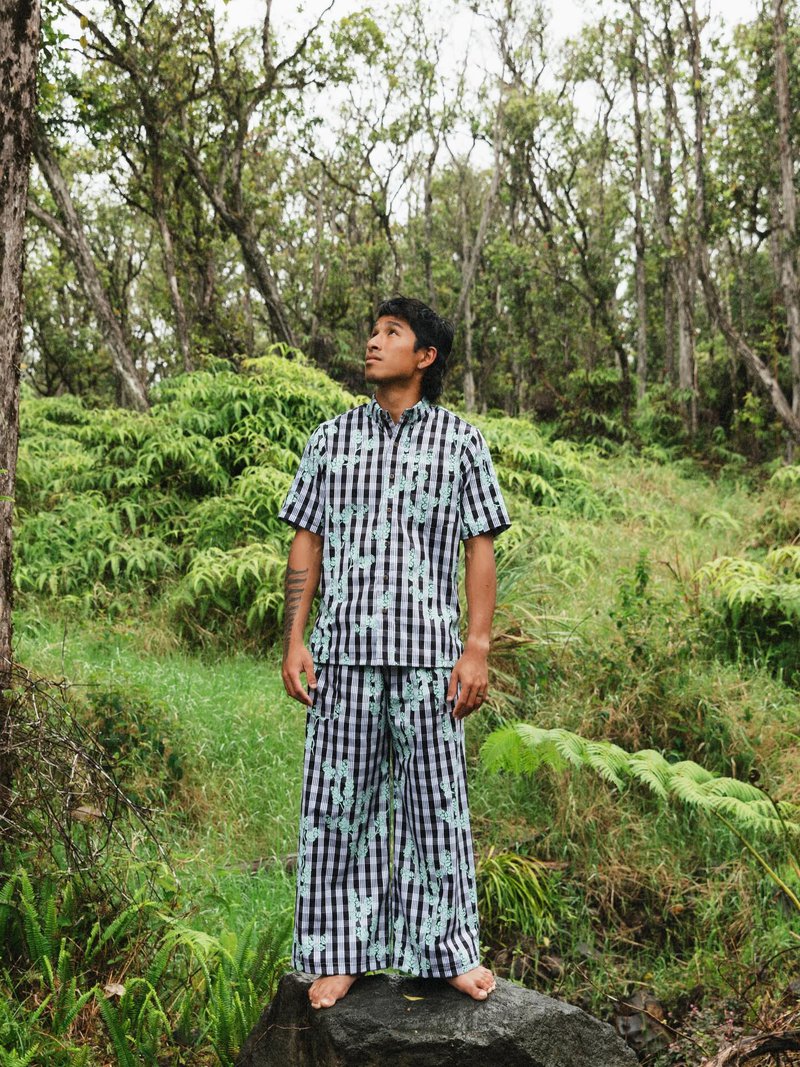
Take the aloha shirt. One of the most recognized garments on earth and one of the least understood, cycled through fashion every few years, still read by most as a souvenir. Look closer and within this shirt is a system. Japanese fabric traditions and Filipino tailoring met a Hawaiian visual language shaped by kapa, the traditional cloth whose patterns carried encoded meaning, and the islands fused them into a garment that could only have come from here. While the shirt itself is worn across every continent, the encoded meaning rarely travels with it.
Beyond the shirt, Hawaiʻi’s imprint sits all over the world, though most of it arrives with no marker at all. Which raises the real question: what allowed other places to send their culture out into the world with its name and its meaning still attached?
Scale explains part of it. A nation of a hundred million exports more of everything, culture included, and its people carry that culture wherever they go. But the places that shape global culture are the ones that treat creativity as infrastructure, built with intention, rather than as mere output.
That infrastructure is the deliberate combination of design, storytelling, and the systems that carry both into the world with their source intact. Design makes identity visible. Storytelling makes it travel. Infrastructure makes it compound, turning individual works into recognition, recognition into influence, and influence into an economy a place actually owns. Some cultures built that machinery. Most never got the chance, and the difference has less to do with a culture’s depth than with who controls the pipeline.
No place on earth is more primed than Hawaiʻi.

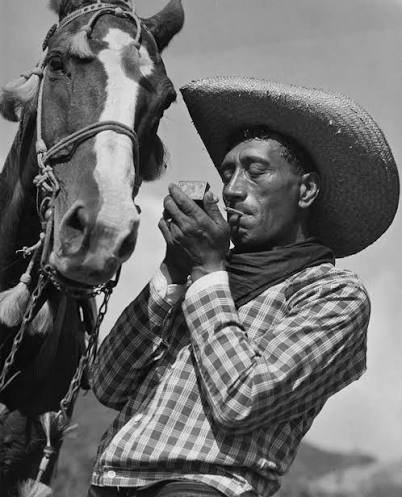
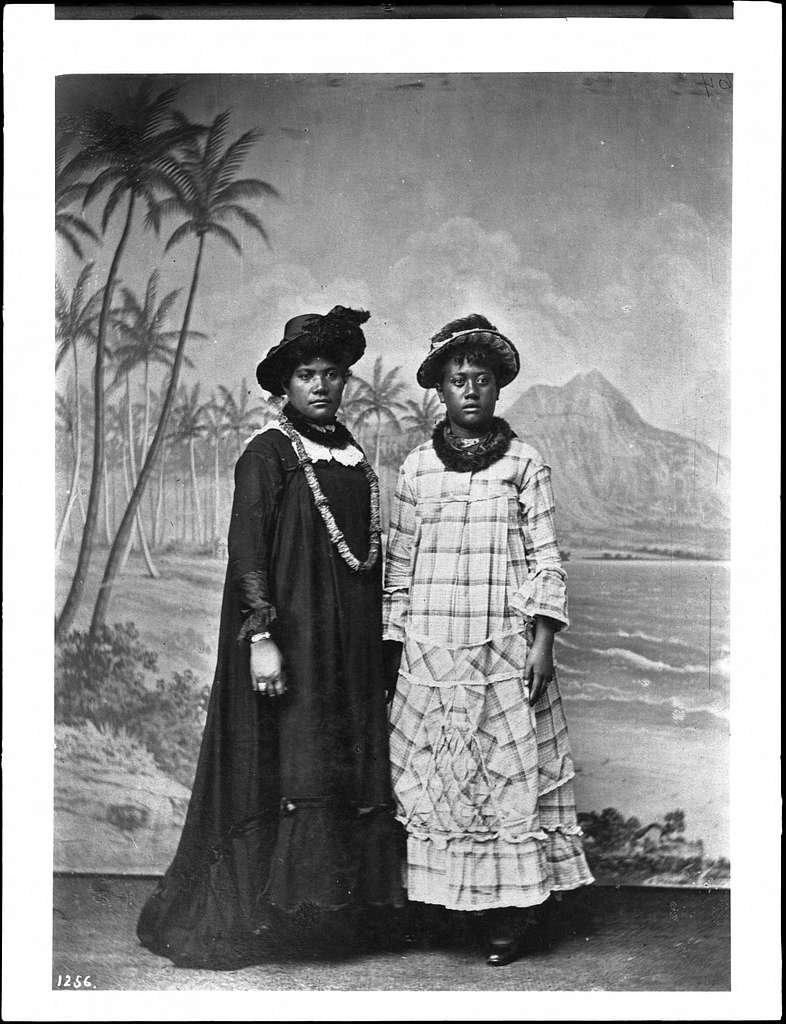
Recovery by design
Start with what Hawaiʻi has.
Before print, before media, every enduring culture built systems to encode and transmit what it knew. In Hawaiʻi, that architecture reached a level the world still underestimates.
Polynesian navigators mapped a third of the planet’s surface without a single instrument: no compass, no sextant, no writing. Stars, currents, and wind patterns were carried in chant and embodied practice precise enough to cross thousands of miles of open ocean. When those techniques were revived in the twentieth century, the scientific community was stunned. The ʻoli, Hawaiʻi’s chant tradition, held an entire civilization’s knowledge in the voice: cosmology, governance, genealogy, environmental science, creative practice, all at once. The ahupuaʻa, Hawaiʻi’s land division system, managed entire island ecosystems from mountain ridge to reef through protocols that modern environmental science now recognizes as among the most effective sustainability models ever developed.
This is what design means at its deepest: not decoration, but a culture’s knowledge made functional and transmissible. A pattern on cloth was encoded meaning. A chant was a database. A land division was an operating system. Whether the culture grows in Kyoto, Lagos, or the middle of the Pacific, this depth is the raw material of global influence.
The pattern holds at every scale. When West African nations won independence in the 1960s, their first acts of nationhood included architecture, civic buildings, and universities that fused modernist form with local identity, announcing to the world that sovereign cultures were designing their own future. MoMA now exhibits that era as a landmark in design history. Identity expressed through the built environment shaped how those nations functioned, how they planned, and how the world saw them. Design at that scale is infrastructure, and it works.
And when new tools reached these shores, Hawaiians showed the world what deep culture does with them. The printing press arrived in 1820. Within a single generation, a purely oral civilization became the most literate nation on earth, with a literacy rate above 90%, publishing nearly 100 Hawaiian-language newspapers, with Native typesetters, editors, and publishers running the pressrooms. Hand this culture a carrying technology, and it does not adopt it. It masters. That same instinct carried outward. This was a kingdom that built its own global relationships, its monarch the first of any nation to circumnavigate the globe, its treaties and friendships with world powers still honored in places today. While external forces would interrupt that trajectory, they never fully erased it.
Read those chapters together, and the conditions come into focus. Here is a civilization that built its own systems from nothing but the intelligence its islands demanded, then made every tool that arrived its own. And while the world continues to visit, it is drawn by a story Hawaiʻi’s people did not write. The attention exists. What turns attention into lasting influence is the system, and one nation across the Pacific has already proven what happens when that system is built by design.
Built on purpose

Bound by more than a century of family lines and global partnerships, Japan and Hawaiʻi share a bond that runs deeper than history. These are island cultures that recognized themselves in each other: the reverence for craft, the value of protocol, the belief that meaning lives inside made things. And Japan is what it looks like when a culture that deep builds the carrying layer on purpose.
A nation rebuilding after the war made the reconstruction of its cultural identity part of the recovery itself, proof that the collective can come back stronger than what was lost.
Over the last half century, Japan has constructed a complete creative ecosystem, with every layer, from elevated craft to street-level pop culture, pulling in one direction. Anime carried Japanese visual language and values into the imagination of every continent by refusing to compromise what it was. Architects like Tadao Ando became global translators of a cultural philosophy into form. Hiroshi Fujiwara connected Japanese street culture to the world, and NIGO turned that influence into range, moving from streetwear to retail to hospitality with the same signature on everything he touched.
At the institutional scale, Muneaki Masuda gave the whole model a name. His Intellectual Capital Theory argues that design and creativity, not products, are the real engines of value, and that an institution’s job is to build cultural infrastructure. The method is a compounding loop: invest in design first, let it draw people in, and let their loyalty accumulate into a platform no competitor can copy. Tsutaya is the proof: a video rental chain reimagined into cultural destinations designed to propose a way of living rather than move inventory. Commerce became culture, and culture became demand.
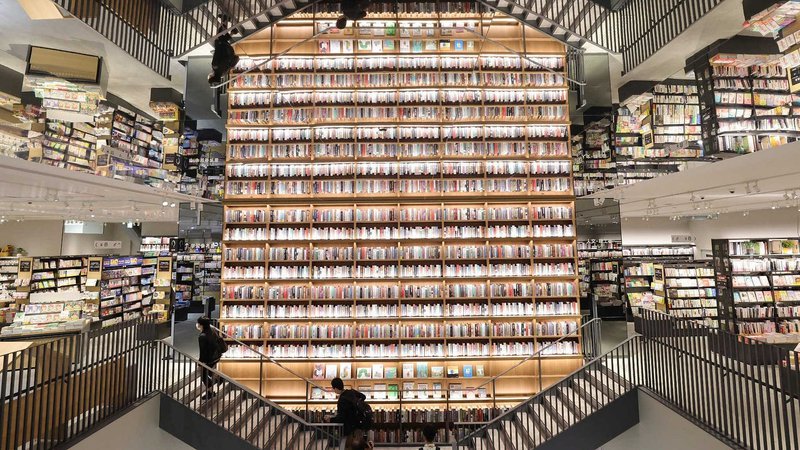
Each of these figures became a vessel for Japan, carrying the whole culture in work that was entirely their own. Stories do not cross the world on their own. They need storytellers to carry them, and Japan made sure it had many.
Look around the world and you continue to see the same pattern: storytellers, design, and the infrastructure to carry both. South Korea treated culture as national strategy, investing deliberately in music, film, and design until its creative exports reshaped how the world sees the country. Bad Bunny reached the top of global music while keeping Puerto Rico at the center of everything, using the Super Bowl stage to speak to the island’s struggles, with an entire culture behind him. Talent emerges everywhere. Influence gets built. So why not Hawaiʻi?
Hawaiʻi has everything except the pipeline
Everything Japan spent decades constructing, Hawaiʻi has carried organically for generations, including a condition unique to these islands: the place itself. Hawaiʻi sits alone in the middle of the largest ocean on Earth, is the most isolated population center in the world, and yet is one of the most generative. A landscape this lush and this remote produced life found nowhere else, and it continues to draw the world’s leading creative minds and innovators to do their most important work. There is a magic that calls people here. It always has. Infrastructure built around that pull turns every arrival into exchange, and every exchange into reach.
The carrying layer is the one condition history interrupted, and the reason is structural. Most of the world’s great cultures hold their identity largely intact; a local in Nigeria or Mexico hears the native language everywhere, absorbed from birth. Every culture has weathered pressure, but scale changes what it does to a people. Hawaiʻi’s population was a few hundred thousand when its kingdom was overthrown and its language banned from schools, and within two generations the language had collapsed toward near extinction. What most cultures inherit as a birthright, Hawaiʻi is consciously rebuilding, and the generation doing it knows exactly what it is worth.
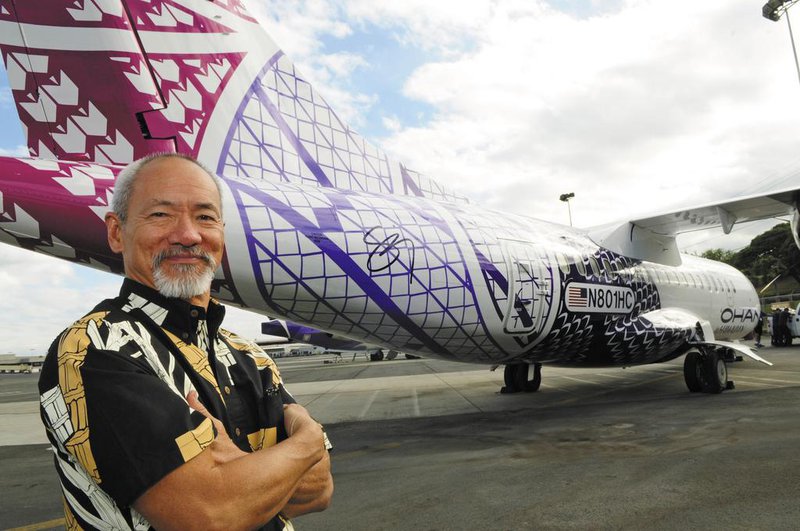
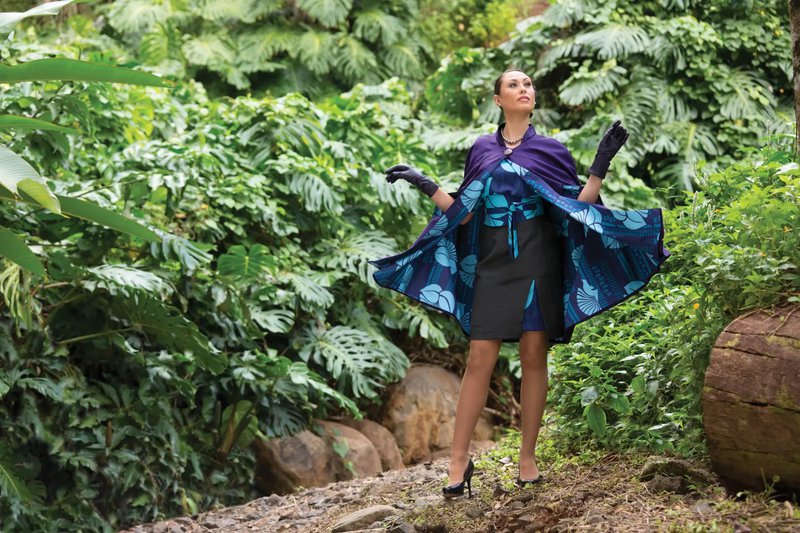
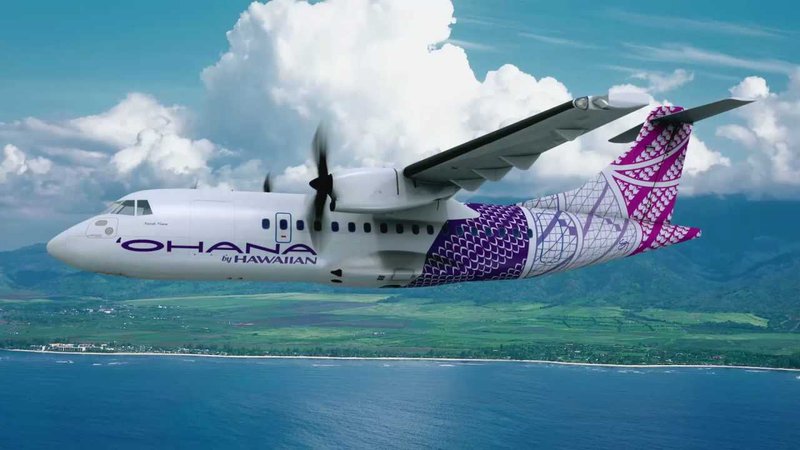
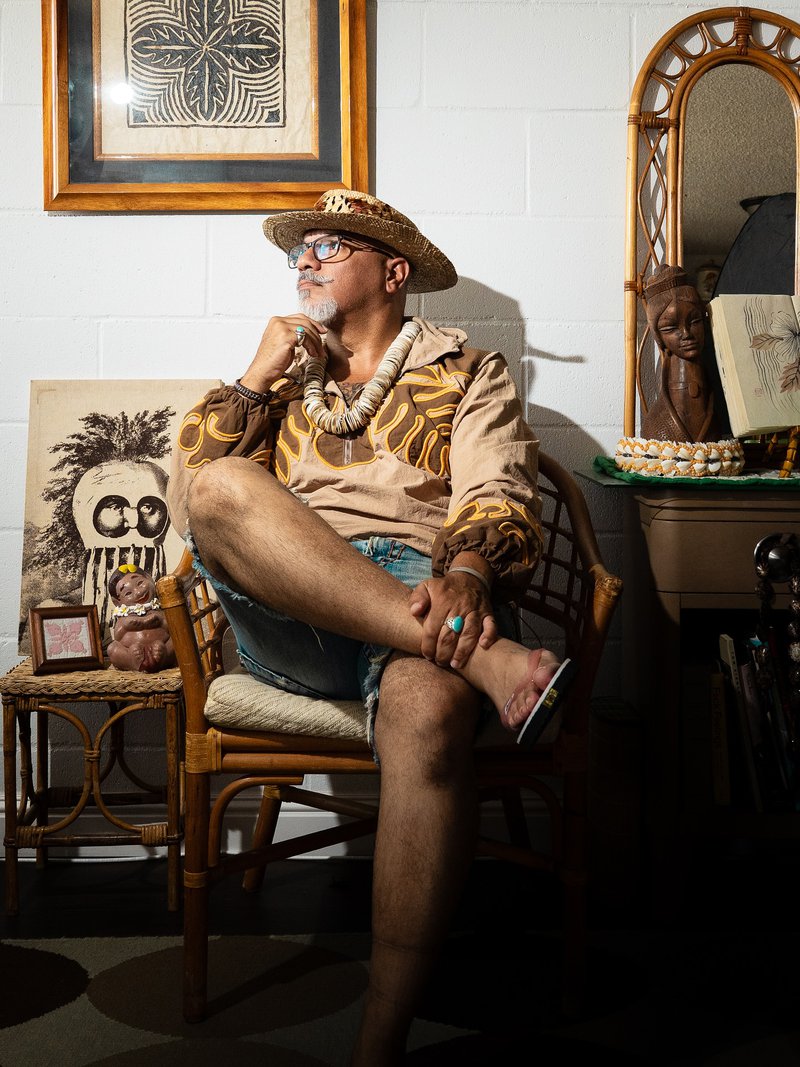
Even without the pipeline, the work never stopped. For decades, Sig Zane and his son Kuhaʻo have been translating deep cultural knowledge into design that lives across clothing and spaces, including extensive work with Hawaiian Airlines, honoring the past while contextualizing it through a modern lens. A generation on, Rocket Ahuna is redefining lei culture and aloha wear, building entire worlds around his work, from his traveling Hanalei stand to shows staged in ancient gardens, and dressing Hawaiʻi talent from red carpets to the octagon. And the design philosophy continues to formalize: the Kanakaʻole Foundation is perpetuating Makawalu, an ancestral methodology of seeing and designing on many levels at once, now moving through architecture schools and design studios, positioning Hawaiʻi as an originator of design thinking, not a recipient.
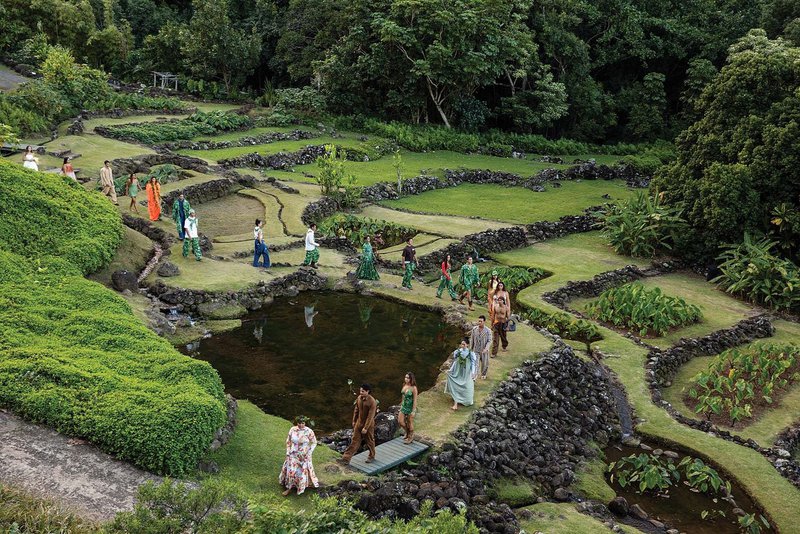
On screen, the presence is compounding. Moana carried Hawaiian navigation mythology to every country on earth, and Chief of War brought Hawaiian language and leadership to global streaming audiences, at a scale unimaginable a generation ago. That success is opening doors, and the talent behind it runs deep. Hawaiian artists, designers, and performers are telling their own stories now, and on their own terms.
A century of world-shaping output without the machinery of recognition. Imagine when it’s built.



The return of Hawaiʻi
Across Hawaiʻi, the infrastructure around them is finally going up, and each effort strengthens the whole.
What this moment requires is a pipeline that flows in both directions. Global resources, audiences, and exchange come in, enriching what gets built here. And what leaves, carried home by visitors or sent out by Hawaiʻi itself, moves with more weight and reach each time. These flows are more than transactions. Every creative from these islands placed on a global stage, every global artist welcomed to these shores, builds a relationship between cultures that outlasts the exchange itself, the kind of bond Hawaiʻi and Japan already prove is possible. That cycle, once established, is how Hawaiʻi takes control of its own narrative and earns its seat at the table of global culture, built deliberately, through investment in design, in storytellers who carry it, and in the systems that carry both.
The economics are no longer theoretical. The traditional lens sees infrastructure as roads, ports, and power grids, the systems built to move goods and people. Albania recently proved that treating culture as infrastructure can do the same work: four million euros from state reserves built a temporary sixty-thousand-seat stadium for a single concert, triple the capacity of the country’s largest venue. Nearly twenty-five thousand ticket holders traveled from eighty countries, and the government projected more than one hundred million euros in spending across hotels, restaurants, and transport during one night of music. The prime minister framed it plainly: investing in a cultural moment was not an expense, but a statement to the world that no traditional campaign could match. A nation of fewer than three million made the bet in a single move. Scale was never the barrier. Intent is.
Hawaiʻi’s opportunity is not a new way to market a destination. It is the model Masuda proved in Japan, where design and creativity became the asset itself, carrying his work beyond bookstores into civic projects commissioned by city governments. The opportunity is to own that model as a culture.
And the timing matters. Hawaiians today face a convergence of pressures, questions of land, of technology, of who decides what comes next. Out of that pressure, a community is beginning to move as one voice. The moment demands more than unity. It demands that the systems carry that voice, intact and unmistakable, wherever it needs to be heard. The time to invest in Hawaiʻi’s creative infrastructure is now.
Hawaiʻi is not emerging. It is returning. And the return is not a story of catching up to a global standard. It is a story of setting one.
Laʻakea Ching is a Native Hawaiian creative producer and designer whose work spans global music, fashion, and media. He is the founder and executive director of Sacred Light, a nonprofit and creative alliance building the infrastructure that connects Hawaiʻi’s talent to global opportunity.
